

A Roman at the Edge of the World Part 2
- Clan of the Ancestors

- Jul 29
- 3 min read
Updated: 6 days ago
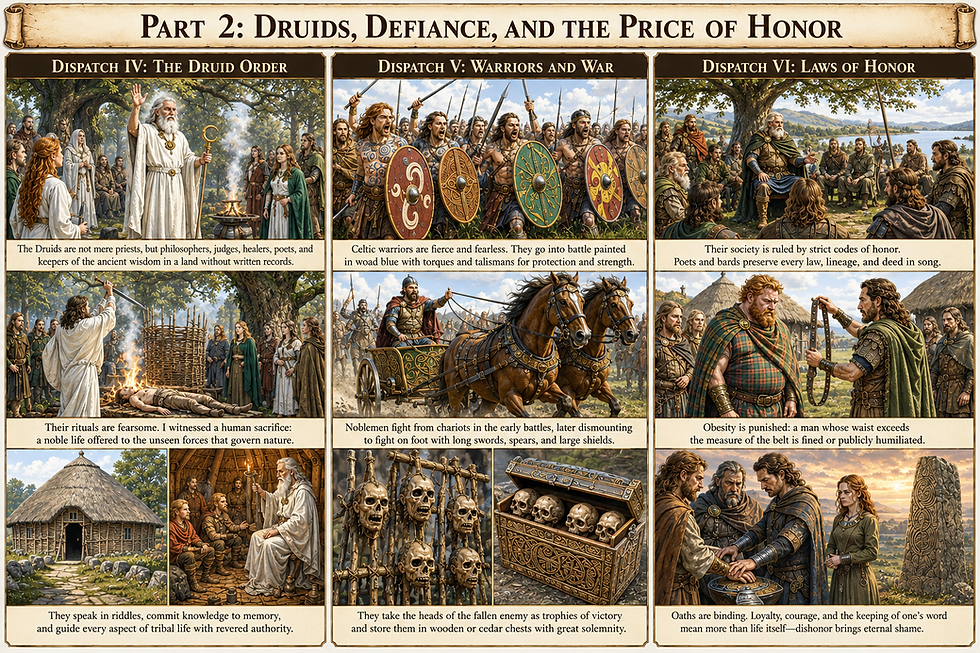
Blood, Iron, and Honey-Beer: The Celtic Warrior EthosDispatch IV: The Ritual of Single Combat If Roman warfare is an exercise in cold legionary discipline, Celtic warfare is a theatrical explosion of pride, passion, and personal honor. They do not march in silent cohorts behind iron shields; they swarm the hillsides like storm clouds, shouting wild songs and filling the valleys with horrible, divisive yelling that shakes the earth. Before battle formally joins, a customary ritual takes place that no Roman commander would tolerate. Individual warriors step forward into the space between armies to challenge the bravest champions of the enemy line to single combat. They do not merely raise their swords; they deliver elaborate insults, derisive songs, and mocking gestures, boasting of their ancestral lineages and previous victories. To refuse such a challenge is to suffer a disgrace worse than death itself. Dispatch V: Trophies of the Soul It is in victory that the Celts reveal their most chilling obsession. When an enemy falls in combat, the warrior does not merely disarm him—he decapitates him. They revere the human head above all else, believing it to be the seat of the human soul, courage, and spiritual power. I watched warriors return from a skirmish with severed heads dangling from the necks of their horses, singing triumphant songs of thanksgiving over these "first fruits" of battle. Upon reaching their homes, they nail these gruesome trophies to their doorframes and wooden walls, much as our patricians in Rome mount the antlers or skins of wild beasts taken in the hunt. But for their most distinguished enemies—a powerful chieftain, a famous champion, or a rival king—a far more elaborate preservation takes place. They embalm the head in precious cedar oil and store it carefully inside a wooden chest. When noble guests or foreign traders like myself arrive, these chests are brought out with great pride, the preserved faces exhibited as proof of the family's martial glory. Dispatch VI: The Champion's Portion and the Feast When the Celts are not fighting foreign foes or neighboring tribes, they fight among themselves—even at their own sacred feasts. Their public dinners take place inside long wooden halls, where warriors sit upon the ground or rest on plush cushions made of wolf skins. By tribal custom, the bravest warrior present is granted the high honor of taking the curadmír—the "champion's portion"—the finest, most succulent cut of roasted meat. Yet in a hall filled with proud, competitive men, disputes over who holds primacy arise constantly. Arguments erupt over a single slice of beef or pork, and fueled by hot blood, swords are drawn. I have seen men fight to the death on the banquet floor over who deserves the champion's piece, turning a joyful feast into a graveyard in a matter of heartbeats. Much of this volatility is fueled by their ferocious appetite for alcohol. Wealthy chieftains import fine Italian and Massaliote wines, trading horses and raw metal for our Mediterranean casks. But the vast majority of the populace drinks a potent wheat beer, occasionally flavored and sweetened with wild honey. The ale is poured into a single, large common cup and passed from warrior to warrior as they gather around the central hearth fire. As night falls, the merriment grows deafening, filled with roaring songs and wild laughter that echoes across the dark hills until dawn. To our Greek geographers, these customs lead them to brand the Irish as the most savage of all peoples, accusing them of unspeakable vices, incest, and even cannibalism. But having sat among them, I see a different truth: their violence is not mindless chaos, but a deeply codified culture of prestige, reputation, and fierce, unyielding pride.


Comments