

The Dumnonii, & The Miraculous Vow at Horsham
- Clan of the Ancestors

- Jul 29
- 3 min read
Updated: 6 days ago
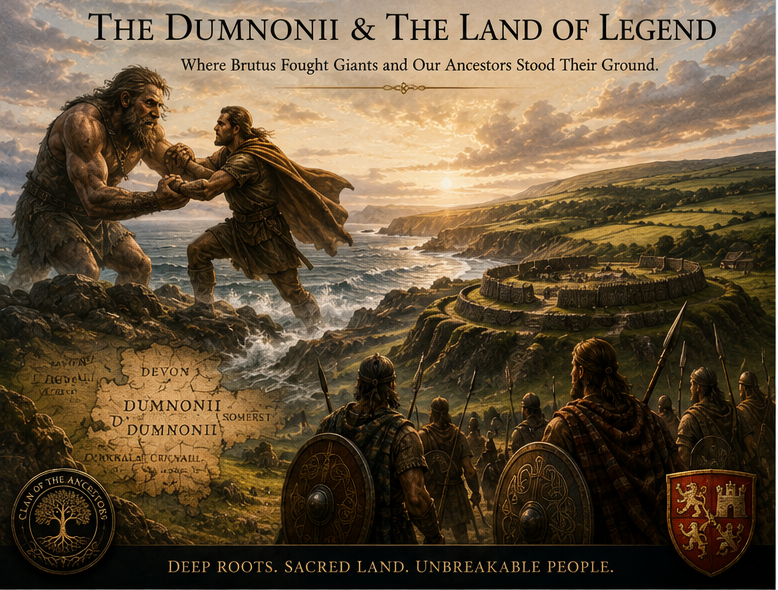
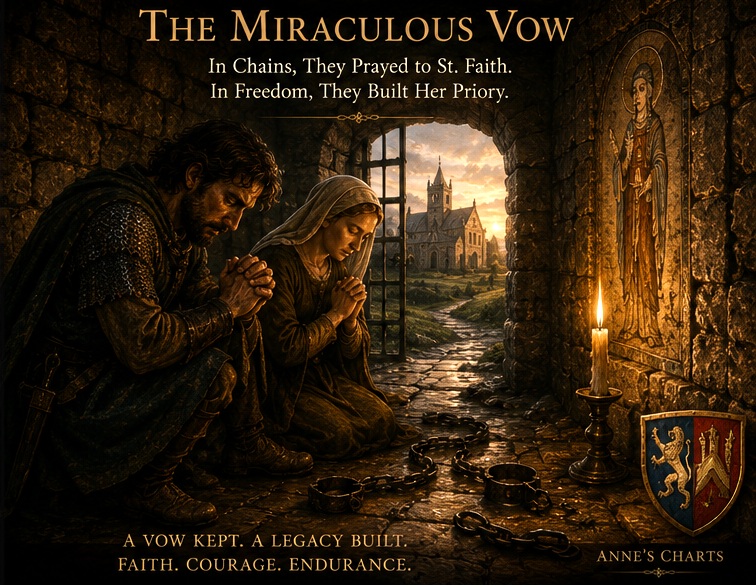
Southwestern England From Trojan giants on the cliffs of Devon to a medieval baron's rescue by St. Faith—how deep roots shape our resilience. When we explore our British Isles ancestry, certain landscapes hold a far deeper resonance than others. Few regions carry the weight of Sacred Geography quite like Southwestern England, the ancient, wild moors of Devon and Somerset. Today, we bring together Part II of our foundational origin story with the wild history hidden on our Week 2 manuscript chart ! The Giants of Albion and the Iron-Hearted Dumnonii If you had asked a medieval chronicler in the West Country where their people originated, they wouldn't have pulled out a tax ledger. They would tell you the legend of Brutus of Troy. According to ancient British foundation myth, after the fall of Troy, Prince Brutus led a fleet of survivors across the sea, landing on the rocky coast of Devon at Totnes. The island was then called Albion and was inhabited by a race of wild giants. Brutus’s champion warrior, Corineus, famously wrestled the king of the giants – Gogmagog - on the Plymouth cliffs, hurling him into the crashing waves before claiming the West Country. While legend spoke of Trojan heroes, archaeology reveals the actual inhabitants: the Dumnonii. The Dumnonii were a fierce, iron-working Celtic tribe that ruled Devon, Somerset, and Cornwall. They were miners, tin traders, and builders of formidable hillforts. When the Roman Empire invaded Britain in 43 AD, they easily conquered eastern England. But when they marched west into Dumnonii territory, the Roman war machine faltered. The Romans built a fortress at Exeter, established a frontier, and left the deep southwest largely to itself. The Dumnonii were simply too stubborn, too entrenched in their rugged moors, and too tough to be broken. The Miraculous Vow at Horsham Priory That same stubborn West Country resilience traveled down through the centuries into the Anglo-Norman families who inherited those lands after 1066. On our Week 2 Master Chart , we see Robert FitzWalter (son of Walter de Caen) and his wife Sybil de Chesney. In the year 1105, Robert and Sybil embarked on a holy pilgrimage across Europe to Rome. While traveling through dangerous territory, their caravan was ambushed by bandits. Imprisoned in a dark dungeon and facing execution, Robert and Sybil made a desperate vow: they prayed to Saint Faith, promising that if they were freed, they would build a monastery on their English lands in her honor. According to medieval monastic chronicles, their chains miraculously fell off in the dead of night, and the dungeon doors swung open. Upon returning safely to England, Robert and Sybil fulfilled their sacred oath, founding St. Faith’s Priory at Horsham in Norfolk in 1105. For over 400 years, that priory stood as a monument to a vow made in a dark dungeon thousands of miles away. What These Deep Roots Teach Us Today Whether we look at the giant-slaying myths of Brutus, the iron hillforts of the Dumnonii, or a Norman knight praying in a dark dungeon, the message across thousands of years remains identical: our ancestors were survivors. They didn't break when empires invaded. They didn't lose hope when ambushed on foreign roads. They held onto their faith, built enduring monuments, and passed their bloodline down through generations until it reached us. When life today feels chaotic or overwhelming, remembering that you carry the blood of the Dumnonii and the Anglo-Norman builders in your veins provides a profound, unshakeable sense of grounding.


Comments